

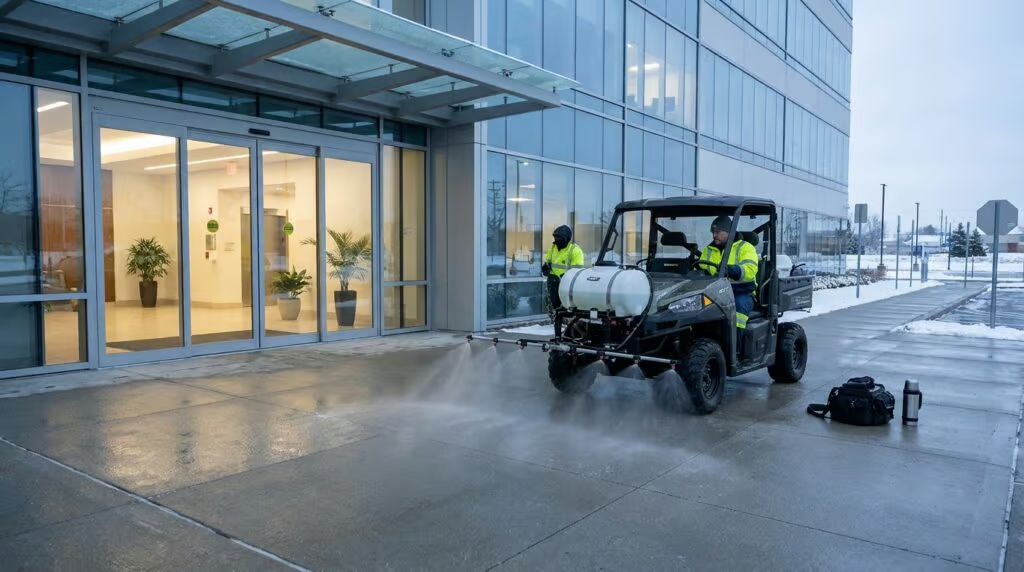
Liquid spray brine reduces mess and tracking inside your commercial building by addressing the problem at the source. Instead of spreading granular de-icers that cling to shoes and get carried into lobbies, we apply a precisely mixed liquid solution that dries on the pavement and prevents snow and ice from bonding in the first place. This means less scraping, less salt residue, and far fewer white footprints on your floors.
The key is understanding that brine is a preventative barrier, not just a reactive melting agent. When applied correctly before a storm, it keeps ice from adhering to walkways and entry mats. That single difference changes everything about how clean your building stays during winter. In the sections below, we explain the science, the mess reduction, a real-world example, and the application techniques that deliver the best results.
How Liquid Spray Brine Prevents Ice Bonding and Reduces the Need for De-icing Chemicals
The Science Behind Liquid Brine as a Protective Barrier
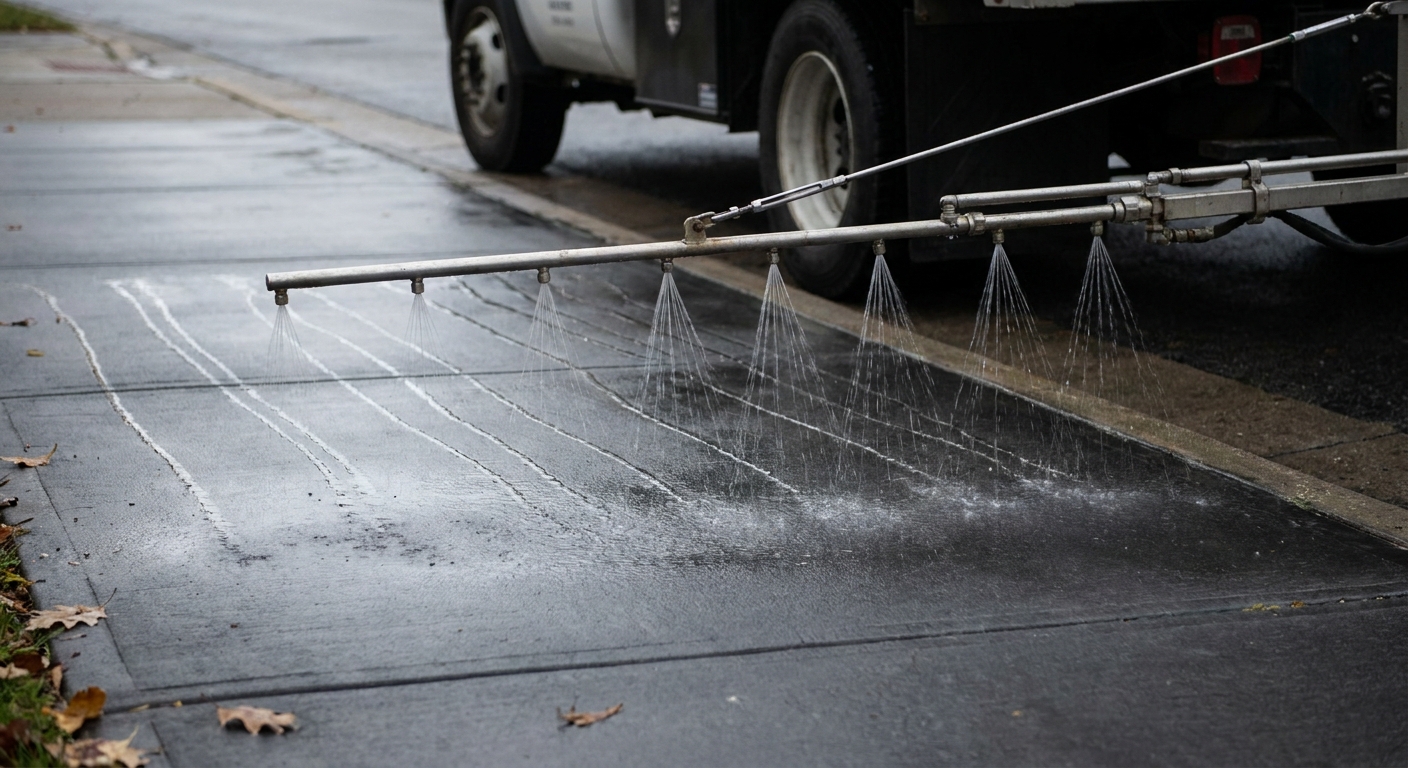
Liquid brine is typically a mixture of rock salt and water at a concentration that lowers the freezing point of water on pavement. When we spray it onto a dry surface ahead of a storm, the water evaporates and leaves behind a thin layer of salt crystals embedded in the pavement pores. This barrier prevents snow and ice from forming a strong mechanical bond with the concrete or asphalt. The result is that plows, shovels, and even foot traffic can remove snow and ice much more easily, often down to bare pavement without aggressive scraping.
Because the barrier is already in place, the ice never gets a chance to lock onto the surface. That means we need far less granular de-icer after the storm to break up any remaining patches. Less de-icer on the ground translates directly into less material available to be tracked inside your building.
Using Less De-icer Means Less Residue to Track Inside
Every pound of granular salt spread on a walkway creates the potential for residue. Granular products bounce, scatter, and get crushed underfoot, producing a gritty dust that clings to shoe treads. By using liquid brine as a pre-treatment, we often reduce the total salt needed for a storm event by a significant margin. Industry programs have reported reductions in total salt use of around 28 percent when brine is part of a pre- and post-treatment strategy. Less salt overall means fewer white streaks, less corrosion on flooring, and a noticeably cleaner entry area.
- Liquid brine stays where it is sprayed rather than bouncing into landscaping or being kicked toward the door.
- Pre-treatment breaks the ice-pavement bond, so mechanical removal requires less follow-up de-icer.
- Reduced salt usage lowers the volume of residue that can be tracked onto interior floors.
No Granular Mess: Why Liquid Spray Brine Keeps Your Entrances Cleaner
The Problem with Granular Ice Melt: Tracking and Mess
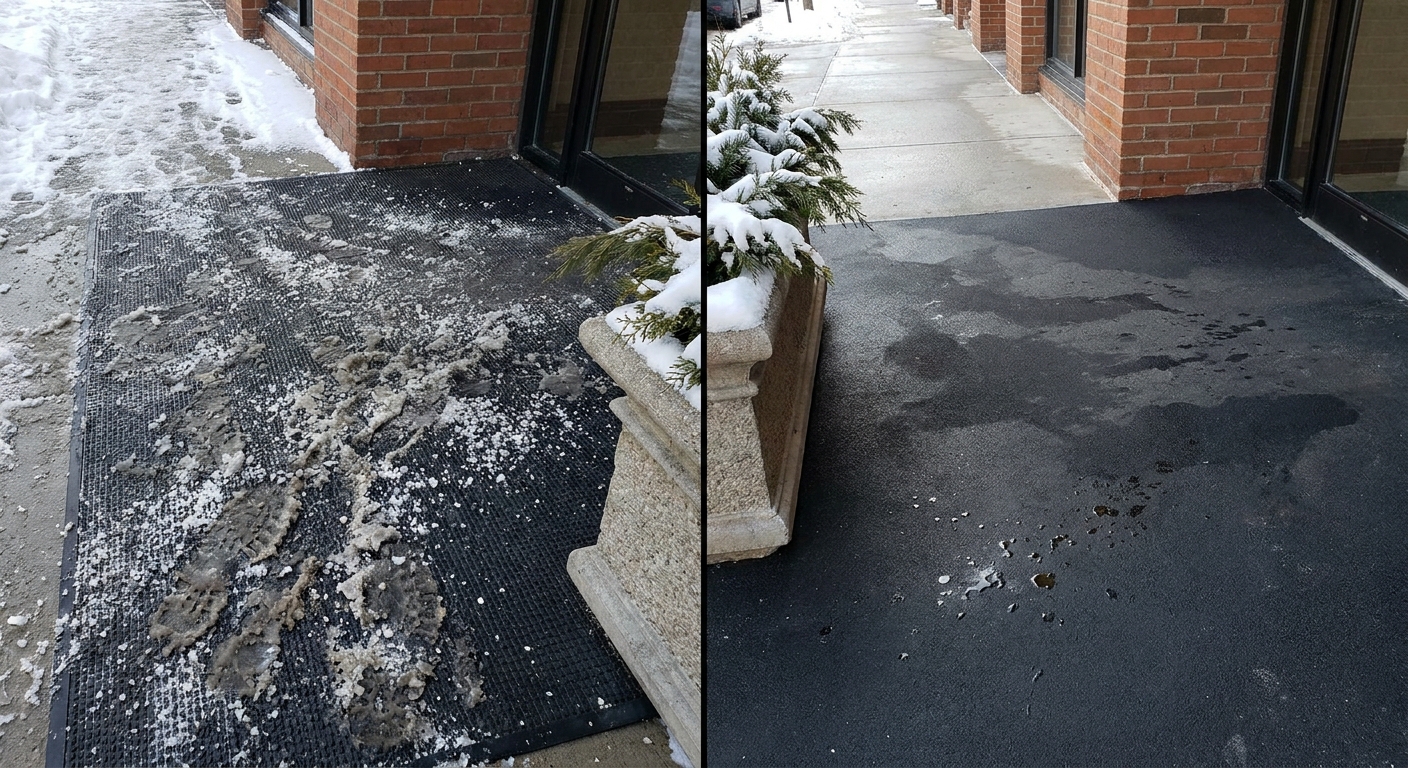
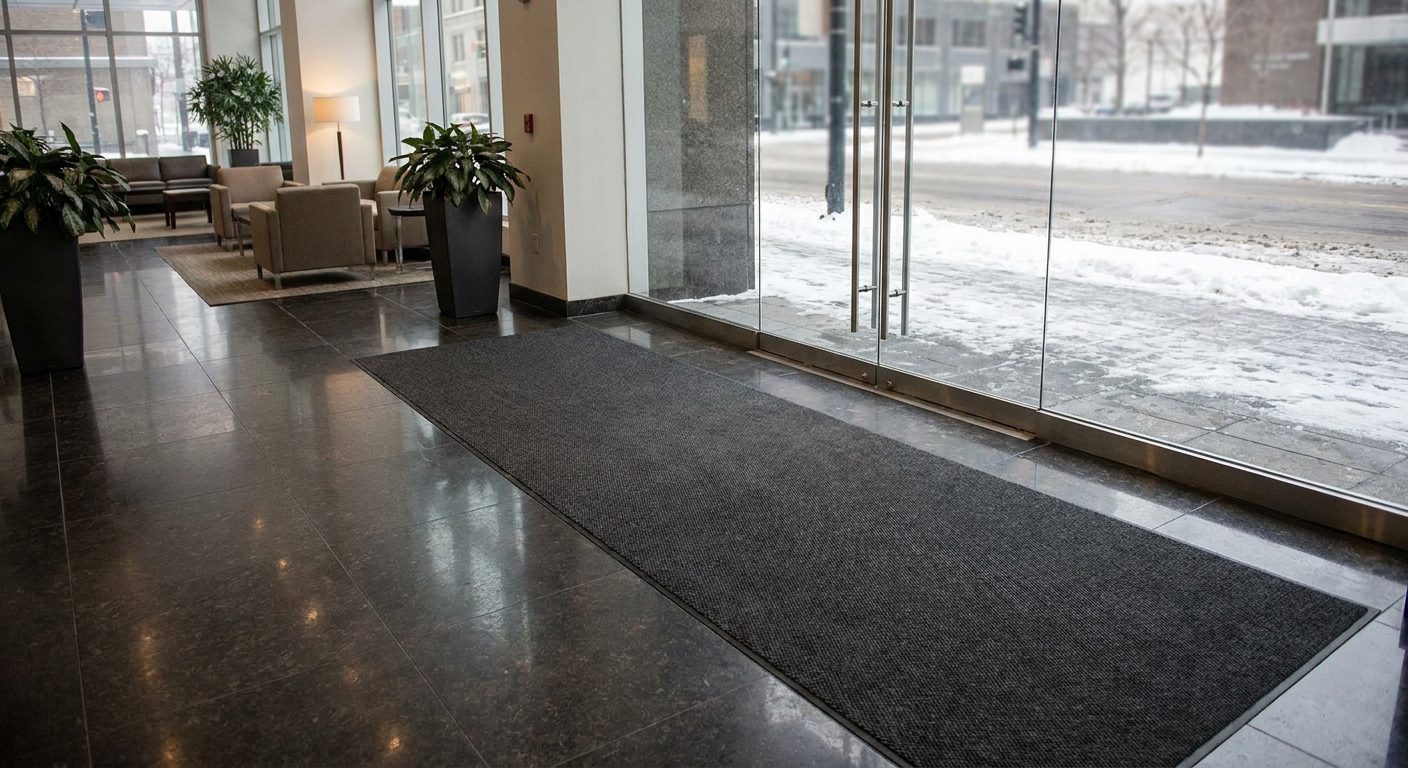
Granular ice melt is effective but messy. When spread on sidewalks and entryways, it creates loose particles that get picked up by every pair of shoes. Those particles are then deposited inside your building, where they can damage carpet fibers, scratch hard flooring, and leave unsightly white residue. Even with aggressive matting and frequent cleaning, granular salt tends to migrate indoors throughout the day. The result is a constant battle against tracked-in salt, especially in high-traffic commercial entrances.
Additionally, granular products require moisture to activate. In very cold or dry conditions, they can sit on the pavement without dissolving, creating slick spots and increasing the amount of material that ends up on shoes. This not only wastes product but also worsens indoor tracking.
Liquid Brine: A Cleaner Alternative for High-Traffic Entrances
Liquid spray brine eliminates the granular particle entirely. After application, the liquid dries to a nearly invisible film. There are no rock salt crystals to stick to shoes, no gritty residue to scrape off, and no piles of excess product accumulating near door thresholds. When applied to entryways and walkways before a storm, brine keeps the pavement clear with minimal visible material. Even after snow removal, the surface remains dry and clean, so people entering your building carry almost nothing on their footwear.
For high-traffic areas like main entrances, loading docks, and pedestrian corridors, this is a game changer. Your floor mats stay cleaner longer, your janitorial staff spends less time mopping up salt residue, and the overall appearance of your lobby improves. Customers and employees notice the difference immediately.
Case Study: Significant Reduction in Salt Tracking Complaints
The Commercial Setting: 12 Retail Locations
To illustrate what liquid brine can achieve, consider a commercial portfolio of 12 retail locations that switched from granular-only de-icing to a program that included liquid brine pre-treatment and post-treatment. The properties ranged from small storefronts to larger parking areas, all with consistent foot traffic throughout winter. Previously, facility managers received frequent complaints from store staff about white salt dust being tracked onto polished floors and staining carpets near entrances.
After the transition, the results were clear. The portfolio documented a 28 percent reduction in total salt use and a 30 percent faster post-storm cleanup time. Most importantly, complaints about salt tracking and stained floors dropped sharply. Clean, dry surfaces at entrances left a strong impression on both employees and customers.
Measurable Outcomes: Fewer Complaints, Cleaner Floors
This type of outcome is not unique. When liquid brine is used consistently as a pre-treatment barrier, properties across many sectors see similar reductions in interior mess. The key metric is not just salt saved but also the number of times maintenance teams have to stop and clean up tracked-in residue. Fewer complaints mean a better tenant experience and a more professional building appearance. We recommend tracking interior complaints during the first season of brine use to measure the improvement directly.
Application Best Practices for Maximizing Mess Reduction Around Commercial Buildings
Pre-Treatment: Applying Brine Before the Storm
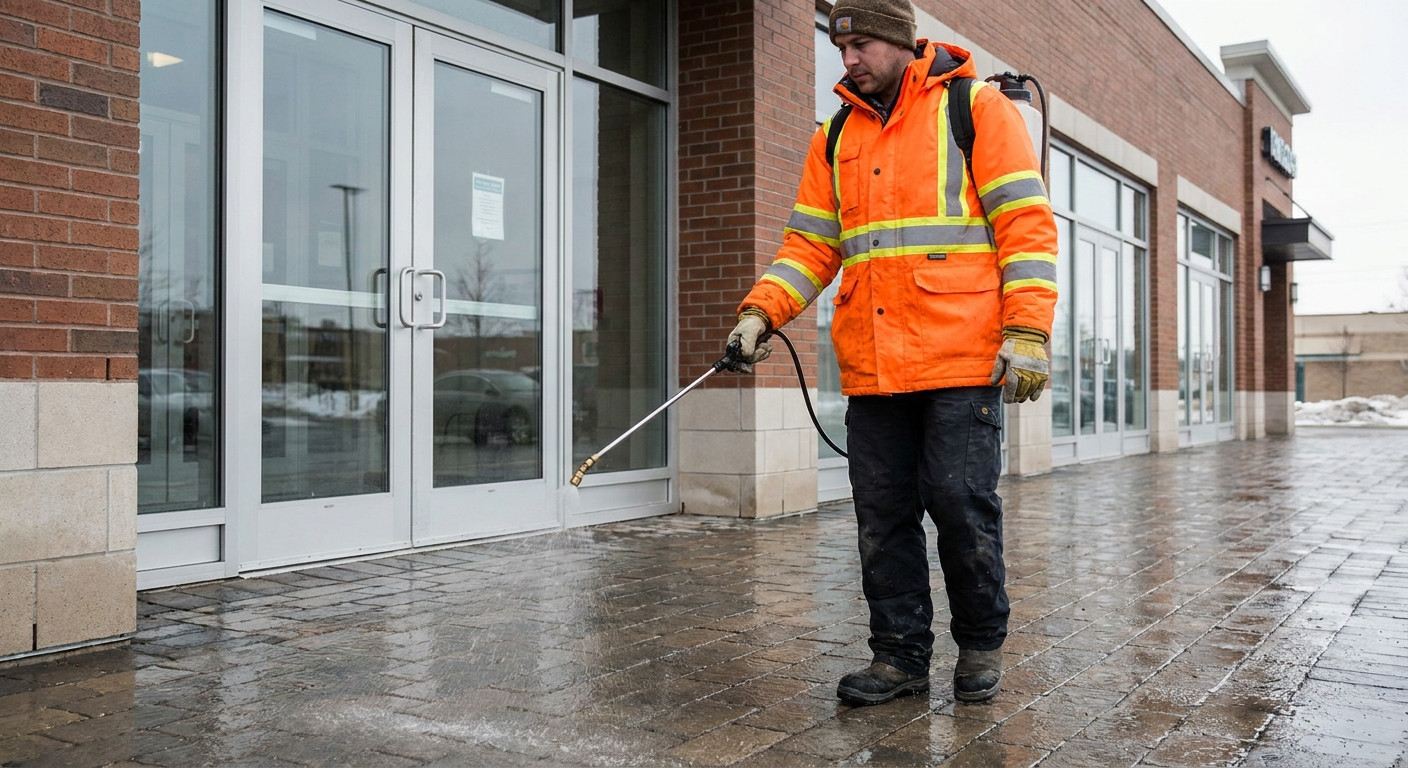
The most important practice is to apply liquid brine before precipitation begins. We aim for a window of 24 to 48 hours before a forecasted snow or ice event, when pavement is dry and temperatures allow the solution to set. Brine applied during that window dries into the pores of the pavement, creating a long-lasting barrier. If applied too early and then washed away by rain, it loses effectiveness, so we monitor forecasts closely and time applications to avoid rain events.
Equipment matters. We use calibrated spray systems that apply a uniform rate across the entire surface. This prevents over-application, which could create slippery conditions, and under-application, which leaves bonded ice patches. The goal is a continuous thin film, not puddles. For entrances, a light, even coat is sufficient to break the ice bond without leaving any visible residue.
Targeted Application: Prioritizing Entryways and Walkways
Not all areas contribute equally to indoor tracking. The highest-priority zones are the paths people actually walk: main entrances, curb cuts, accessible ramps, and the first 20 to 30 feet of sidewalk outside each door. By concentrating liquid brine on these high-traffic routes, we reduce the amount of material needed while maximizing the mess-reduction benefit. Parking lot lanes and less-used areas can receive a lighter treatment or be handled with pre-wetted salt, depending on conditions.
We also revisit these zones after plowing. A light post-storm application of brine to any residual ice patches helps dissolve them without introducing granular product. This final step keeps the pavement dry and clean through the end of the storm cycle.
Conclusion: Embrace Liquid Spray Brine for a Cleaner, Healthier Commercial Environment
Liquid spray brine reduces mess and tracking inside your commercial building by preventing ice from bonding to pavement, drastically cutting the need for granular de-icers, and leaving no residue to be carried indoors. The result is a cleaner lobby, safer walking surfaces, and a more professional appearance all winter long. We encourage you to review your current winter maintenance program and consider how liquid brine could fit into your pre-treatment strategy.
If you are ready to see the difference, contact us to discuss a brine program tailored to your building’s entrances and high-traffic areas.
Areas We Serve
- Abbotsford snow removal service
- Aldergrove snow removal service
- Burnaby snow removal service
- Coquitlam snow removal service
- Langley snow removal service
- Maple Ridge snow removal service
- Mission snow removal service
- New Westminster snow removal service
- Pitt Meadows snow removal service
- Port Coquitlam snow removal service
- Richmond snow removal service
- Surrey snow removal service
- Vancouver snow removal service