

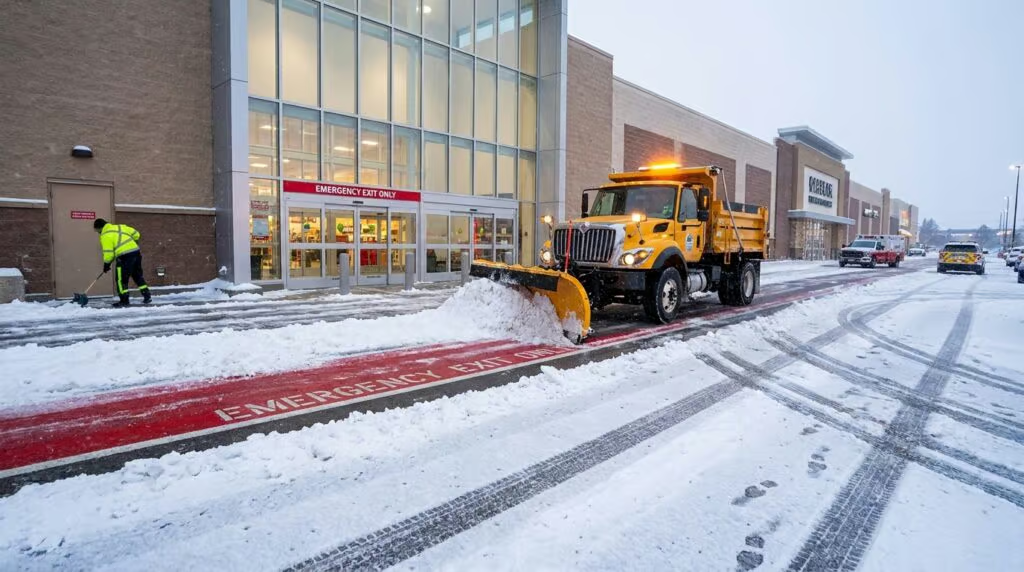
Maintaining Emergency Access: Snow Plowing Strategies for Fire Lanes and Exits is not about clearing snow after a storm ends; it is about keeping the path between first responders and your building open from the first flake to the final pass. A fire lane blocked by plowed snow can delay a response by minutes, and an exit door drifted shut can trap occupants inside. The difference often comes down to where snow is placed, not just how fast it is cleared.
In this guide, we walk through the regulations, pre-season planning, equipment choices, and ongoing plowing patterns that keep fire lanes and exits accessible under continuous snowfall. Each strategy is grounded in the same operational reality we face on commercial properties every winter: snow does not stop falling just because you cleared once.
Understanding Fire Lane and Exit Regulations
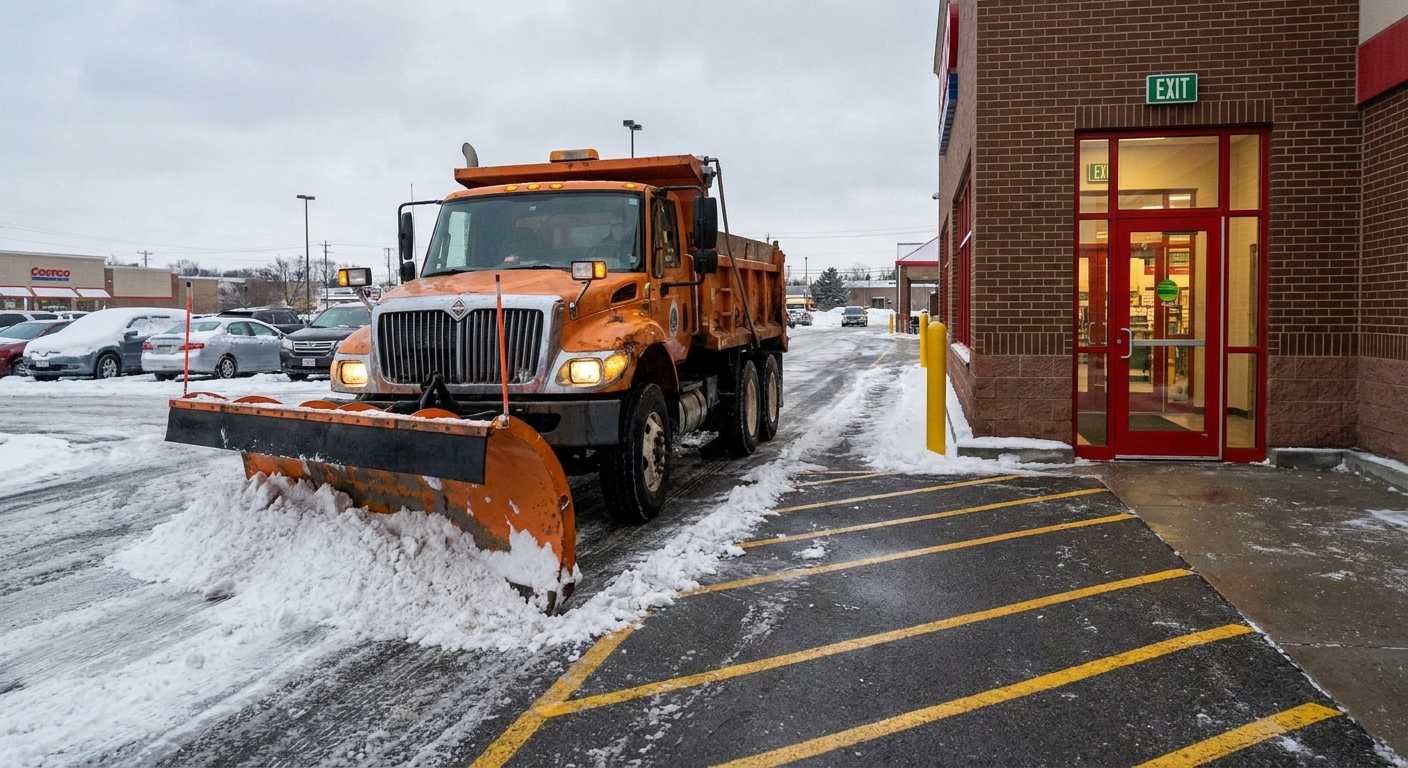
Fire codes generally require fire lanes to be kept clear of snow and ice so that fire apparatus can approach and operate. Exits must remain usable at all times, including during a storm. We treat any accumulation that reduces the clear width of a fire lane or impedes door swing as a violation of that intent.
Key Requirements for Fire Lanes and Exits
- Fire lanes must maintain a clear width and height for fire apparatus to pass and set up.
- Exit doors must swing freely and the path from the door to a public way must remain unobstructed.
- Snow must not be piled against exit doors, over fire hydrants, or in a way that blocks access to fire department connections.
Local Code Compliance for Emergency Access
Local codes may specify no-parking zones, minimum clearances, and snow removal responsibilities. During pre-season walk-throughs we review the site against these requirements and flag any area where snow storage could conflict with required access.
- Confirm required clear width for fire lanes from local fire prevention bylaws.
- Locate all fire hydrants and fire department connections and mark them for snow clearing priority.
- Verify that exit doors and illuminated exit signs remain visible above snow banks.
Pre-Season Planning and Preparation
Preparation before the first snowfall determines whether fire lanes stay clear all winter. We start by identifying every access point and marking it so that plow operators can see priorities even in low visibility.
Marking Fire Lanes and Exits to Maintain Emergency Access
Use reflective stakes or flags to mark fire lane edges, exit doors, hydrants, and catch basins before the ground freezes. These markers must be tall enough to remain visible above expected snow accumulation.
- Place markers at the corners of fire lanes and along long straight stretches.
- Mark exits from both inside and outside so no one mistakes a snow pile for a wall.
- Use bright colors or reflective tape for night plowing operations.
Identifying Snow Storage Areas
Designate snow storage areas away from fire lanes, exits, hydrants, and sight lines. Pushing snow into the wrong spot can create a larger emergency access problem than the snow itself.
- Ensure storage areas do not reduce the clear width of any access route.
- Place storage downwind and away from building exits to avoid drifting back.
- Confirm that stored snow will not block drainage or create ice patches on walkways.
Establishing Snow Removal Contracts
A written contract should specify trigger depths, response times, and priority clearing for fire lanes and exits. Without this, a contractor may clear the main entrance first and leave the rear fire lane buried.
- Set a snowfall trigger (for example, 2 cm) that activates plowing.
- Define response time from trigger to first pass on fire lanes.
- Include a site map with fire lanes, hydrants, and exits marked as priority areas.
Snow Clearing Equipment and Techniques
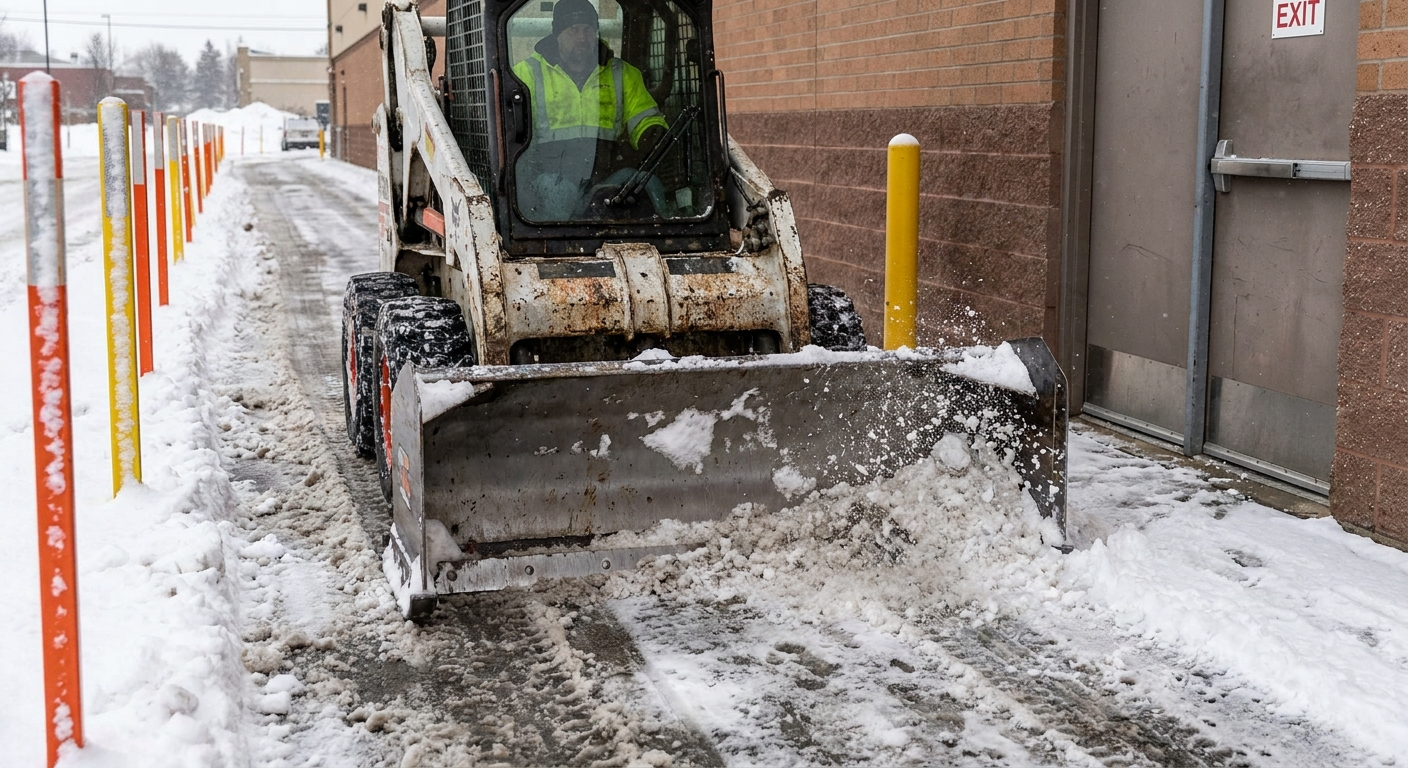
The right equipment prevents both blockage and damage. We match the machine to the surface and the space: large truck plows for open fire lanes, smaller skid steers for tight exit areas, and pusher boxes for moving snow long distances without leaving windrows.
Choosing the Right Equipment for Emergency Access
- Use plows with rubber or urethane cutting edges on concrete and asphalt to avoid scraping away paint markings.
- For narrow fire lanes or exit paths, use smaller equipment that can maneuver without hitting doors or bollards.
- Consider snow blowers or loaders for high-volume sites where storage space is limited.
Plowing Patterns to Maintain Access
Plow patterns should start at the exit door and work outward, pushing snow away from the building and toward the designated storage area. Never plow across an exit in a way that leaves a windrow blocking the door.
- Clear the fire lane first, then the parking stalls, to avoid re-drifting snow into the lane.
- Push snow straight back from exits, then angle toward storage.
- Make multiple passes in heavy snow to maintain the full clear width of the fire lane.
Snow Storage and Relocation Strategies
Where snow ends up is as important as where it came from. A fire lane can be clear for a moment, but a poorly placed snow pile can slide or drift back into the access route.
Where to Put Plowed Snow
- Pile snow on lawns or landscaped areas away from fire lanes when possible.
- Stack snow in corners of parking lots that do not affect sight lines or turning radii for fire trucks.
- Never push snow onto public sidewalks or over property lines unless permitted.
Avoiding Blockages of Fire Hydrants and Exits
After every plow pass, we check that hydrants remain accessible and exits are not buried. A single storm can hide a hydrant under a pile if operators are not watching.
- Clear a 1-metre radius around each fire hydrant and fire department connection.
- Do not stack snow against exit doors, even if the door swings inward.
- Remove snow that falls from roofs or drifts against exits as part of the same service visit.
Coordinating with Professional Snow Removal Services
Professional snow removal works best when the property manager and the contractor share the same priority list. Fire lanes and exits cannot be an afterthought.
Service Level Agreements and Response Times for Emergency Access
- Write fire lane clearing as the first task in every service visit, before general lot clearing.
- Specify a maximum time for completing a full pass on all emergency access routes.
- Require that all exits be cleared to full width and that doors open freely before the crew leaves.
Communication During Snow Events
Real-time updates prevent confusion. We use GPS-tracked equipment and photo documentation so property managers can confirm fire lanes were cleared without driving to the site in the storm.
- Set up automated alerts when plowing starts and stops.
- Share before-and-after photos of fire lanes and exits after each service.
- Maintain a dedicated contact for the property manager to reach the crew during a storm.
Monitoring Weather and Snowfall Forecasts
Continuous access depends on acting before snow accumulates beyond safe limits. We monitor forecasts constantly during winter months and adjust staffing and equipment based on predicted intensity and duration.
Using Weather Data to Plan Clearing Operations
- Watch for storms with high snowfall rates that may require more frequent plowing passes.
- Pre-treat fire lanes and exits with de-icer before the storm when conditions allow.
- Schedule additional crews for storms expected to last more than a few hours so no access route is left unattended.
Ensuring Continuous Access During and After Snowstorms
A cleared fire lane before a storm is not enough. The goal is to keep it passable throughout the entire weather event.
Ongoing Plowing Strategies
Set a trigger depth—commonly 2 to 3 cm—that prompts a plow pass. In heavy snow, this may mean plowing every hour or two. Each pass must clear the fire lane completely, not just create a single tire track.
- Plow continuously during active snowfall to stay ahead of accumulation.
- Clear exits first on every pass, then work outward to the fire lane.
- Remove windrows at the end of each pass so they do not freeze into barriers.
Clearing Exits as Snow Falls to Maintain Emergency Access
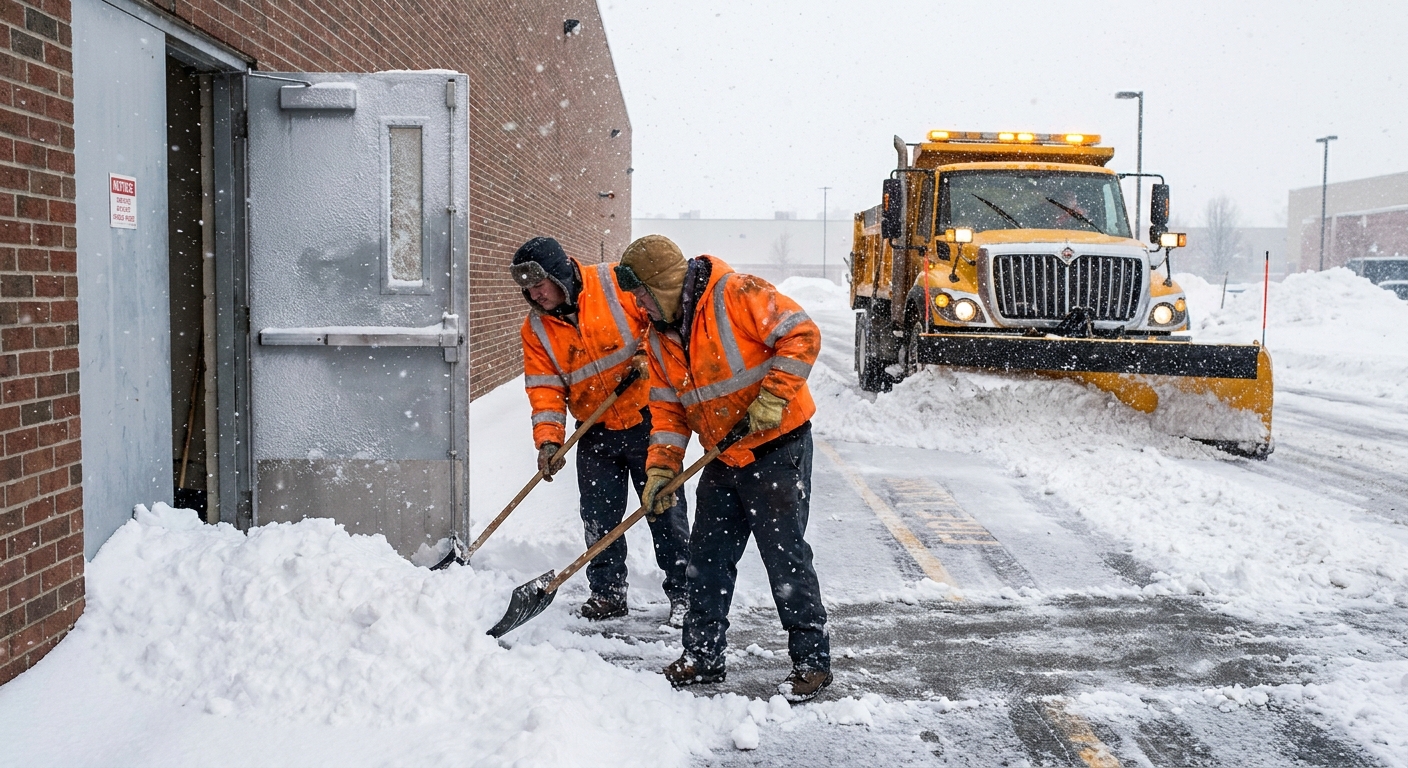
Exits are the most vulnerable because even a small drift can block a door. We assign a crew member or dedicated machine to clear exits and their immediate paths repeatedly during the storm.
- Shovel or blow snow away from door swings and landings.
- Clear the full width of the exit discharge path, not just a narrow walkway.
- Check exits after each plow pass to ensure snow has not been pushed back against them.
Managing Ice and Compacted Snow
Snow that is not removed can compact into ice under vehicle and foot traffic, creating a hazard that is harder to remove than fresh snow.
De-icing Methods and Materials
- Apply de-icer to fire lanes and exit paths before, during, and after snow clearing to prevent bond formation.
- Use a product suited to the surface temperature; some de-icers stop working below certain temperatures.
- Avoid overapplication on concrete, which can cause scaling and create a slippery brine layer.
Mechanical Removal Techniques
When ice does form, mechanical removal is often the only effective solution. We use scrapers, ice blades, or milling attachments on small equipment to break up ice without damaging the surface below.
- Scrape ice in thin layers rather than trying to remove it all at once.
- Clear ice from exit door thresholds and landings with hand tools if necessary.
- Remove all loose ice chips after scraping so they do not refreeze into new patches.
Communication and Signage for Emergency Access
Signs and clear communication prevent people from parking in fire lanes or dumping snow in exit paths. We work with property managers to keep signage visible and messages consistent.
Clear Signage for Fire Lanes and Exits
- Install reflective “No Parking – Fire Lane” signs at regular intervals.
- Mark exit doors with illuminated signs that remain visible above snow banks.
- Use pavement markings that contrast with snow, repainting before winter if faded.
Informing Occupants of Snow Clearing Operations
Building occupants can unknowingly obstruct snow clearing by parking in a fire lane during a storm. We recommend property managers send notices before and during snow events.
- Tell tenants where to park during plowing so fire lanes stay clear.
- Post signs at building entrances explaining that exits will be cleared continuously.
- Ask occupants to report any blocked exit or fire hydrant they notice.
Legal Responsibilities and Liability
Property owners and managers are responsible for maintaining clear emergency access. A blocked fire lane is not just an inconvenience; it can delay fire response and expose the owner to fines and civil liability.
Compliance with Fire Codes and Bylaws
- Understand that fire code violations can result in fines or orders to immediately clear the obstruction.
- Keep fire lanes clear even when the business is closed—emergency access is required 24/7.
- Ensure snow removal contractors are instructed in writing to prioritize fire lanes and exits.
Potential Liability for Non-Compliance
If a fire truck cannot reach a building because a fire lane was blocked by snow, the consequences can include property loss, injury, and legal claims. Documentation of snow clearing efforts is often the first line of defense.
Record Keeping and Documentation
We document every service with GPS data and before-and-after photos, so there is no record without proof. This documentation supports your legal defense and insurance claims should an incident occur.
Good records also help you manage contractor performance over the season. You can verify that fire lanes were cleared at the agreed times and identify patterns of missed areas.
Documenting Snow Clearing Activities
- Keep a log of plow start and end times, equipment used, and operator names.
- Photograph fire lanes and exits after every service visit from consistent angles.
- Record de-icing applications, including material type and amount.
Importance for Insurance and Legal Defense
In the event of a slip-and-fall or fire access delay, your records can show that you took reasonable steps to maintain access. Without documentation, it is your word against the claim.
- Provide clear evidence of plowing frequency and timing.
- Demonstrate that exits were not blocked at the time of service.
- Support any insurance claims related to snow and ice damage.
Integrating Snow Removal with Emergency Preparedness Plan
Snow clearing for fire lanes should be part of the building’s broader emergency response plan, not a standalone winter chore.
Coordination with Fire and Rescue Services
- Share your site map and snow storage plan with the local fire department during pre-planning.
- Ask fire officials to review whether your fire lane clear width and turning radii are adequate in winter conditions.
- Notify the fire department if a snow event has temporarily blocked an access route you cannot clear immediately.
Role in Broader Emergency Response
During any emergency, occupants need clear exits and first responders need clear access. Snow removal is one part of that chain, and it must be coordinated with evacuation routes and assembly points.
Special Considerations for High-Rise and Multi-Unit Buildings
Larger buildings have more exits, more fire lanes, and more stakeholders. A single missed exit can create a serious hazard.
Multiple Exits and Parking Areas
- Inventory every exit door and fire lane on the property, including rear and side exits.
- Assign clear priority to exits serving high-occupancy floors or accessible units.
- Ensure snow storage does not reduce the number of usable parking spaces needed for emergency vehicles.
Coordination with Property Management
We work with property managers to establish a single point of contact for snow issues and to ensure all tenants receive consistent messaging about plowing operations.
Accessible Exits and Ramps
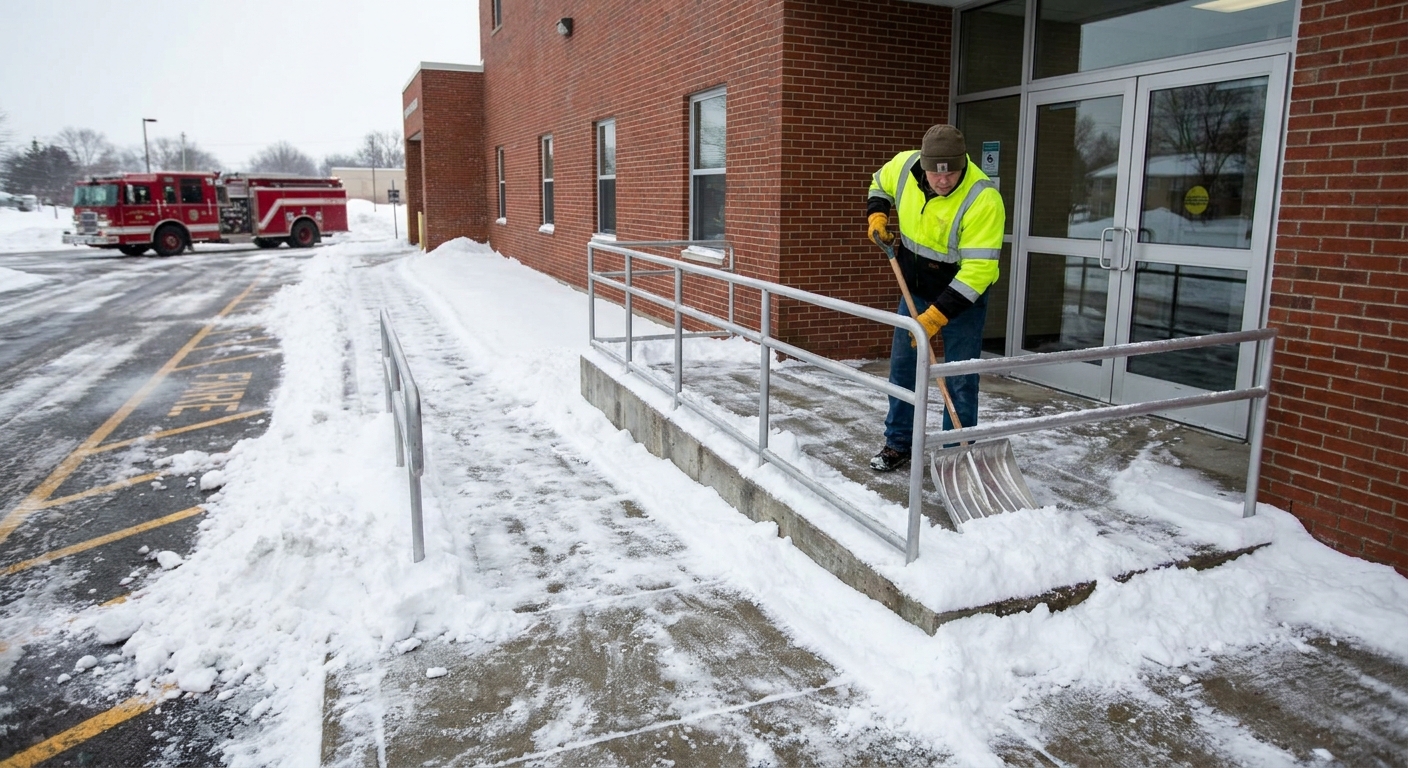
Accessible routes must remain clear for people using wheelchairs, walkers, or strollers. Snow and ice on a ramp can make an exit impossible to use.
Maintaining Accessibility Standards
- Clear the full width of accessible ramps, landings, and doorways, not just a narrow path.
- Remove snow from curb cuts and accessible parking spaces adjacent to exits.
- Check that tactile warning surfaces are not covered by ice or snow.
Clearing Ramps and Accessible Routes
Ramps require extra attention because de-icing chemicals can pool and refreeze. We use mechanical removal first, then apply de-icer sparingly to avoid creating a slick film.
- Shovel ramps by hand when equipment cannot reach without damaging edges.
- Clear the entire ramp length and the level landing at top and bottom.
- Reapply de-icer after snow clearing to prevent ice from forming on the ramp surface.
Post-Storm Inspection and Maintenance
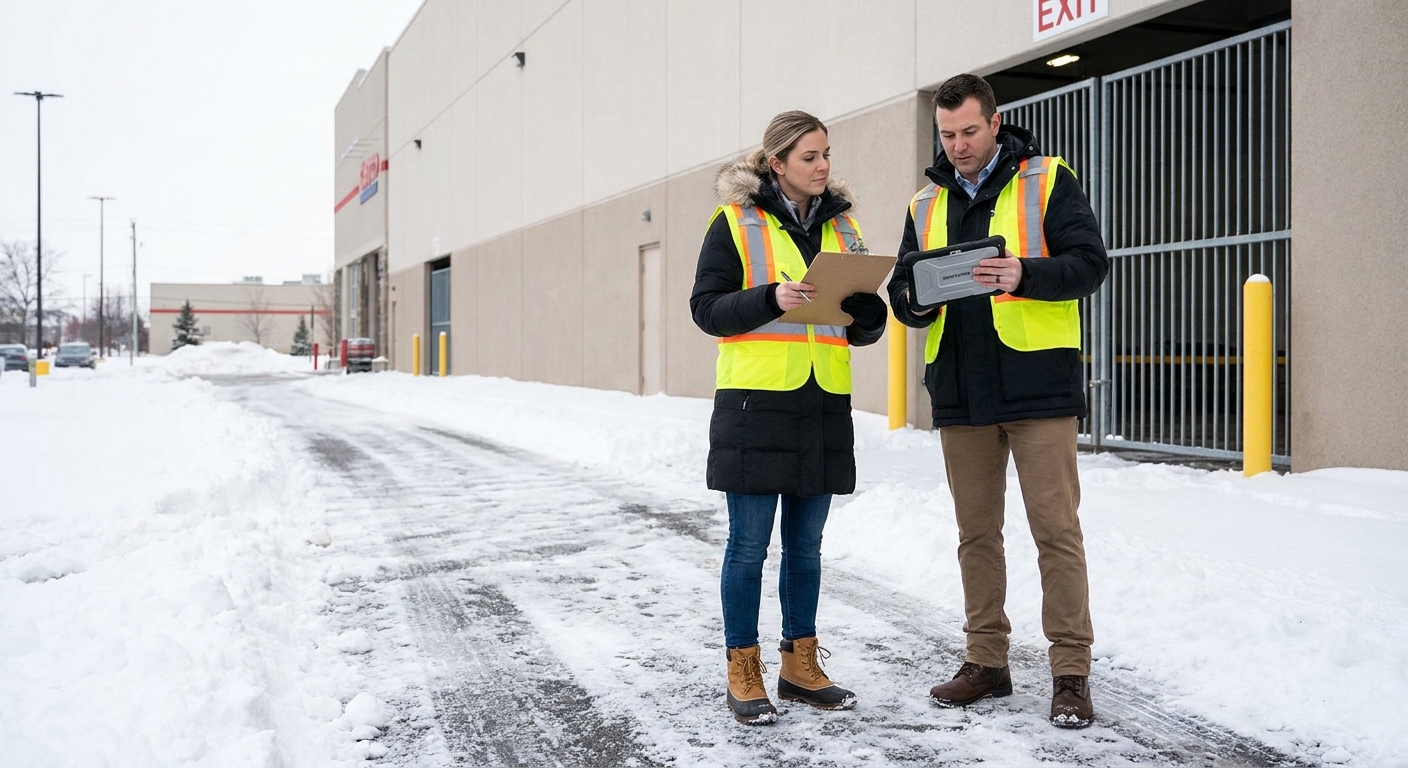
After the snow stops, a final inspection is the only way to confirm that emergency access is truly clear. We walk the entire property with a checklist before closing out the event.
Identifying Remaining Hazards
- Check every fire lane for windrows, ice patches, or snow piles left by plows.
- Open every exit door to ensure it swings freely and the path is clear.
- Inspect fire hydrants and fire department connections for snow or ice covering.
Repairing Any Damage
Snow removal can occasionally damage pavement markings, signs, or door hardware. Prompt repair prevents the damage from becoming a safety issue or code violation.
- Replace or repaint damaged fire lane markings before the next storm.
- Straighten any knocked-over reflective stakes or signs.
- Report any damage to the property manager immediately so repairs can be scheduled.
Keeping fire lanes and exits clear all winter is a continuous process, not a one-time task. If you need help building a snow clearing plan that puts emergency access first, contact us to review your site before the next storm.
Areas We Serve
- Abbotsford snow removal service
- Aldergrove snow removal service
- Burnaby snow removal service
- Coquitlam snow removal service
- Langley snow removal service
- Maple Ridge snow removal service
- Mission snow removal service
- New Westminster snow removal service
- Pitt Meadows snow removal service
- Port Coquitlam snow removal service
- Richmond snow removal service
- Surrey snow removal service
- Vancouver snow removal service