

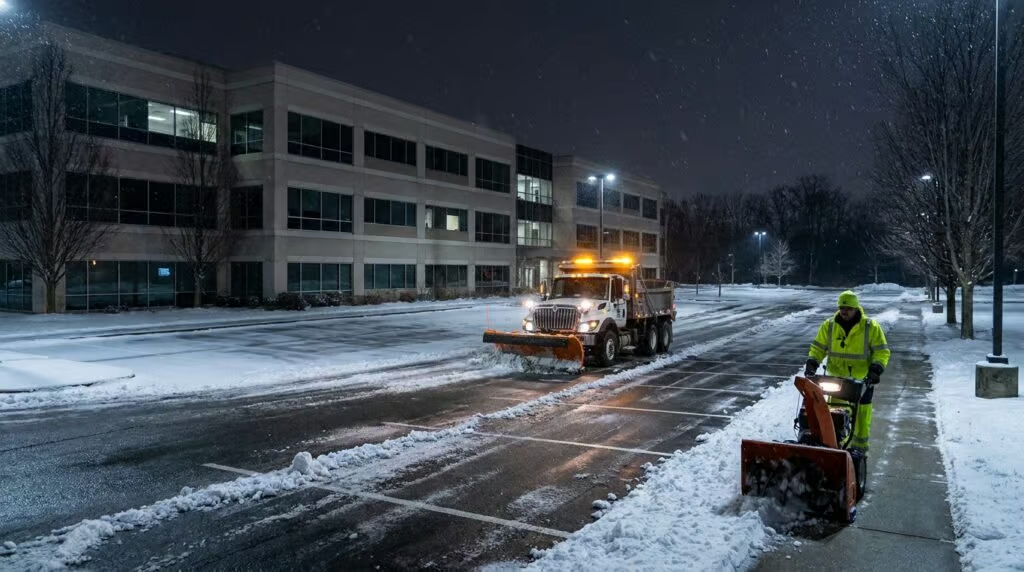
Most business owners assume that local noise bylaws make overnight snow plowing off-limits. In practice, snow removal is often treated as an essential service, and many municipalities carve out narrow exceptions that allow plows to run before 7 a.m. or after 10 p.m. Understanding these rules ahead of time helps you plan staffing, parking, and customer access without last-minute surprises. Use this guide to navigating noise bylaws and overnight snow plowing for businesses.
Below we break down how noise bylaw hours work for snow removal, what happens during declared significant weather events, and the operational realities that affect commercial properties when plows run overnight.
Understanding Noise Bylaw Hours and Exemptions
Most noise bylaws set general quiet hours for residential areas, but commercial and industrial zones often have different standards. When it comes to snow removal equipment, the picture is even more varied. Some bylaws exempt snow clearing from noise restrictions entirely during and after a snow event; others set specific windows when plowing is allowed, even if general noise rules would otherwise prohibit it. The key is to check the exact wording for your local bylaw, because phrases like ‘snow removal equipment’ or ‘winter maintenance’ may trigger different rules than general construction or landscaping noise.
Permitted Hours for Snow Removal Equipment
Many municipalities allow snow removal equipment to operate outside normal noise control hours when there is snow or ice on the ground. For example, a bylaw might prohibit general power equipment from 10 p.m. to 7 a.m. Monday to Saturday, and from 10 p.m. to 9 a.m. on Sundays and holidays, but then add an exception: ‘snow removal equipment operated for the purpose of clearing snow or ice from driveways, parking lots, or sidewalks is permitted at any time when snow or ice is present.’ This means a contractor can legally start plowing at 4 a.m. if a snowfall ended at midnight. However, the exception usually applies only when the equipment is actively removing snow or ice, not when it is being used for other maintenance tasks. If no snow has fallen, running a snow blower at 6 a.m. could still draw a noise complaint.
- Verify the exact decibel limits for your area; some bylaws use measurable thresholds rather than blanket time bans.
- Confirm whether the bylaw applies to private contractors or only to municipal equipment. Private operators may face stricter enforcement.
- Keep a written log of snowfall start and end times to demonstrate that plowing occurred during an active or recently ended snowfall.
Municipal Exemptions for Overnight Clearing
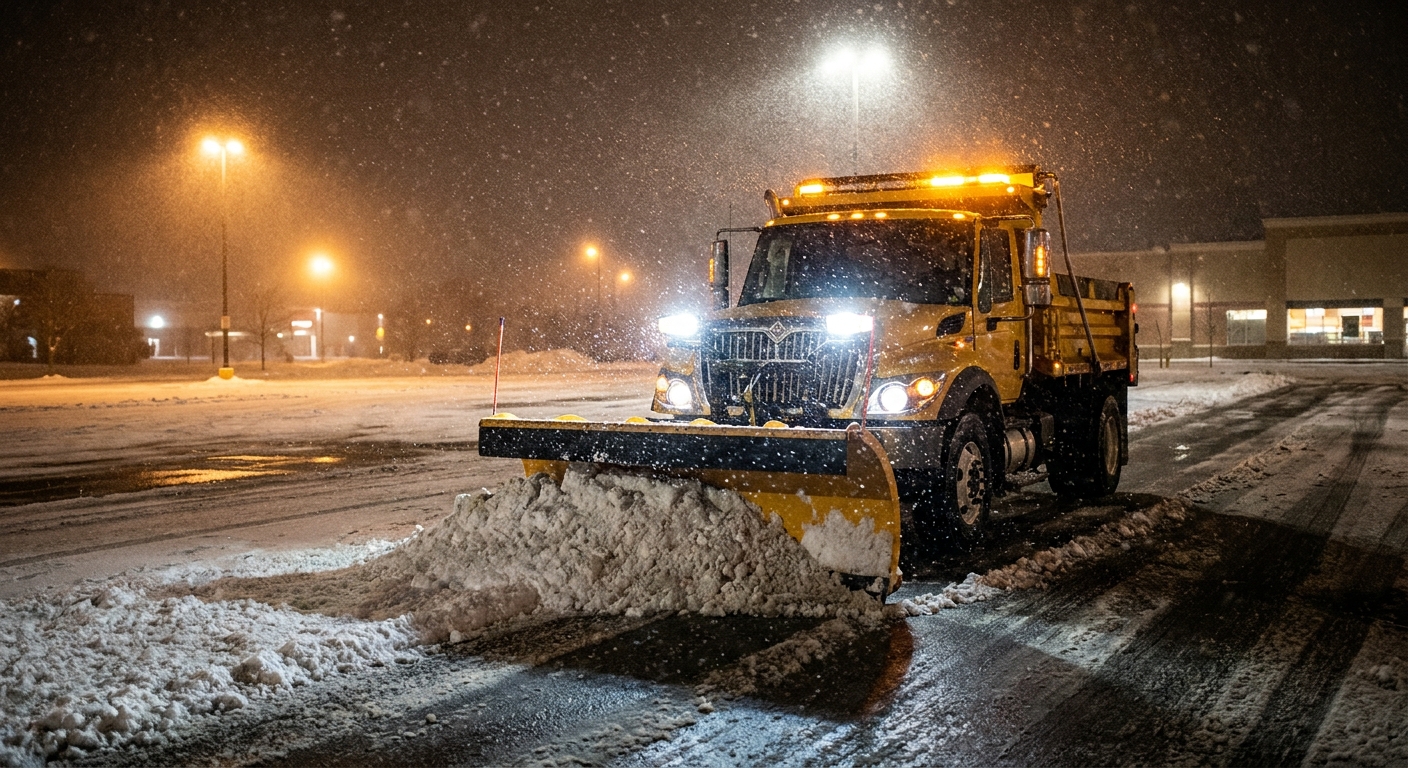
Municipal snow removal operations almost always have broad exemptions from noise bylaws, because clearing roads for emergency vehicles and public transit is considered a higher priority than quiet hours. Even if a bylaw restricts private contractors, city or regional plow trucks are often allowed to run continuously during and after a storm until priority routes are passable. This means your business may hear plows at 3 a.m. even if you have never received a noise complaint about your own contractor. The exemption typically covers not only the plow truck itself but also auxiliary equipment like graders, loaders, and salt spreaders.
- Look for language in the bylaw that exempts ‘vehicles engaged in snow clearing or ice control on public highways.’
- Understand that the exemption may last until the municipality declares the storm response complete, which can be days after the snowfall ends.
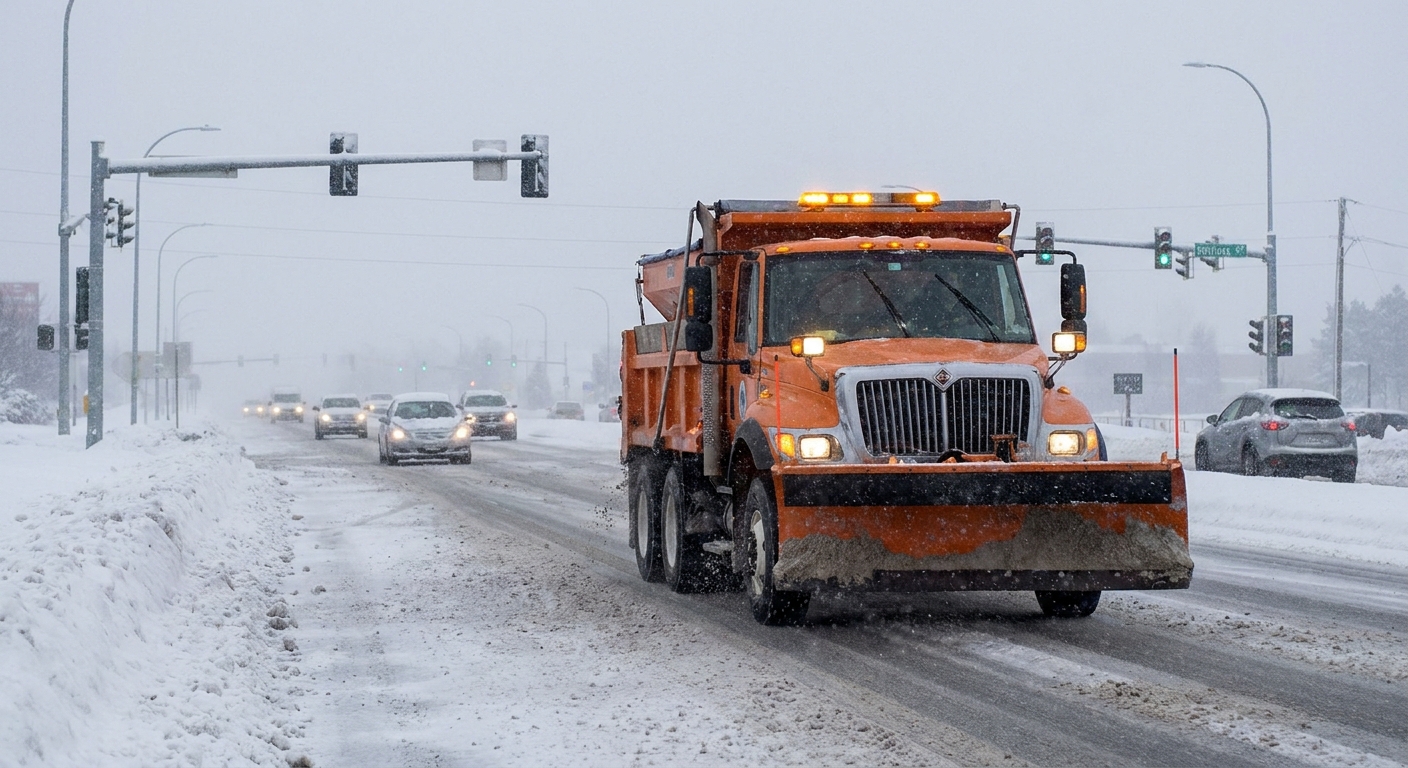
- If you operate a business adjacent to a major road, expect overnight plowing during any significant snow event, regardless of your own site’s clearing schedule.
Impact of Significant Weather Events on Plowing Schedules
Many jurisdictions have a formal mechanism to declare a ‘significant weather event’ or ‘snow event.’ Once declared, normal timelines for snow clearing are suspended, and plowing operations often continue around the clock. This declaration does not just extend the hours when municipal crews can work; it also usually removes any remaining noise bylaw restrictions for snow removal equipment, public or private. The result is that your commercial property may experience plow noise at any hour, not because the contractor is ignoring the rules, but because the legal framework has shifted.
How Weather Declarations Extend Plowing Hours
A significant weather event declaration is typically issued when snowfall exceeds a certain threshold over a short period, or when freezing rain, drifting snow, or extreme cold creates hazardous conditions. Once the declaration is in effect, snow clearing becomes a 24-hour operation until the municipality lifts the declaration. During this time, private contractors may also be granted extended hours, although the specifics vary. The declaration may be posted on municipal websites and social media, and some municipalities send direct alerts. Businesses should monitor these declarations because they directly affect when plows can legally operate on your property.
- Sign up for municipal weather alerts and road condition updates to know when a significant weather event has been declared.
- Expect that your snow removal contractor may shift to overnight clearing during a declared event, even if your service agreement specifies daytime clearing.
- Document any noise complaints from neighbours during a declared event, as the bylaw exemption may resolve them quickly.
Operational Challenges for Businesses During Overnight Plowing
Overnight plowing brings a set of practical headaches that go beyond noise. From contractor scheduling to parking enforcement, businesses often find themselves caught between legal obligations and operational needs. Here are the most common friction points and how to manage them.
Private Snow Removal Contractor Dilemmas
Private contractors walk a narrow line. They must clear your lot before employees or customers arrive, but they also risk noise bylaw fines if they start too early. Some contractors refuse to plow before 6 a.m. unless a snowfall is ongoing, while others insist on a clause in the service agreement that shifts liability for noise to the property owner. We always review the local bylaw wording with clients before the season starts and set a clear trigger time for overnight plowing. That way, if a forecast shows snow ending at 4 a.m., everyone knows the plow will not arrive until the legal window opens.
Overnight Parking Restrictions
Many municipalities ban on-street parking during snow events, even in areas that normally allow overnight parking. This forces tenants, employees, and customers to move vehicles, but it also creates space for plows to work without obstruction. If your business has a private lot, you may face a different problem: overnight plowing requires that all vehicles be removed by a set time. If an employee leaves a car overnight, the plow may have to work around it, creating uneven clearing and potential liability. Communicate clear parking deadlines and enforce them on nights when significant snowfall is forecast.
- Post visible signs with seasonal parking rules and the specific times vehicles must be moved.
- Coordinate with your snow contractor to confirm the plow’s expected arrival window so you can notify tenants or staff.
- If vehicles are towed, document the situation and share the bylaw reference with the vehicle owner.
Snow Plow Route Priorities and Their Impact
Whether plows are municipal or private, route priorities mean some areas get cleared long before others. Major arterial roads, bus routes, and emergency access points always come first. A commercial plaza on a collector street may not see a plow until 12 hours after a storm ends, while a downtown loading dock might be cleared within hours. If your business relies on early morning deliveries, overnight plowing on adjacent roads may actually benefit you, even if the noise is disruptive. Understanding where your property falls in the priority hierarchy helps you set realistic expectations.
Sidewalk Clearing Responsibilities vs Noise Restrictions
Business owners are almost always responsible for clearing sidewalks adjacent to their property, often within 24 hours of a snowfall. But if you hire a contractor to do that work at 5 a.m., you may be trading a potential slip-and-fall liability for a noise bylaw violation. The solution is to check whether your municipal noise bylaw treats sidewalk snow removal differently from parking lot plowing. Some bylaws allow hand shovelling at any hour but restrict power snow blowers. If you need to clear sidewalks before opening, consider using manual shovels or electric equipment that operates below the noise threshold.
Reducing Noise Impact from Snow Plowing Equipment
Even when plowing is legally permitted overnight, reducing noise is good business practice. It keeps neighbours happy, protects your property’s reputation, and may help you avoid formal complaints that trigger bylaw enforcement. Several equipment and operational changes can significantly lower noise without compromising snow clearing quality.
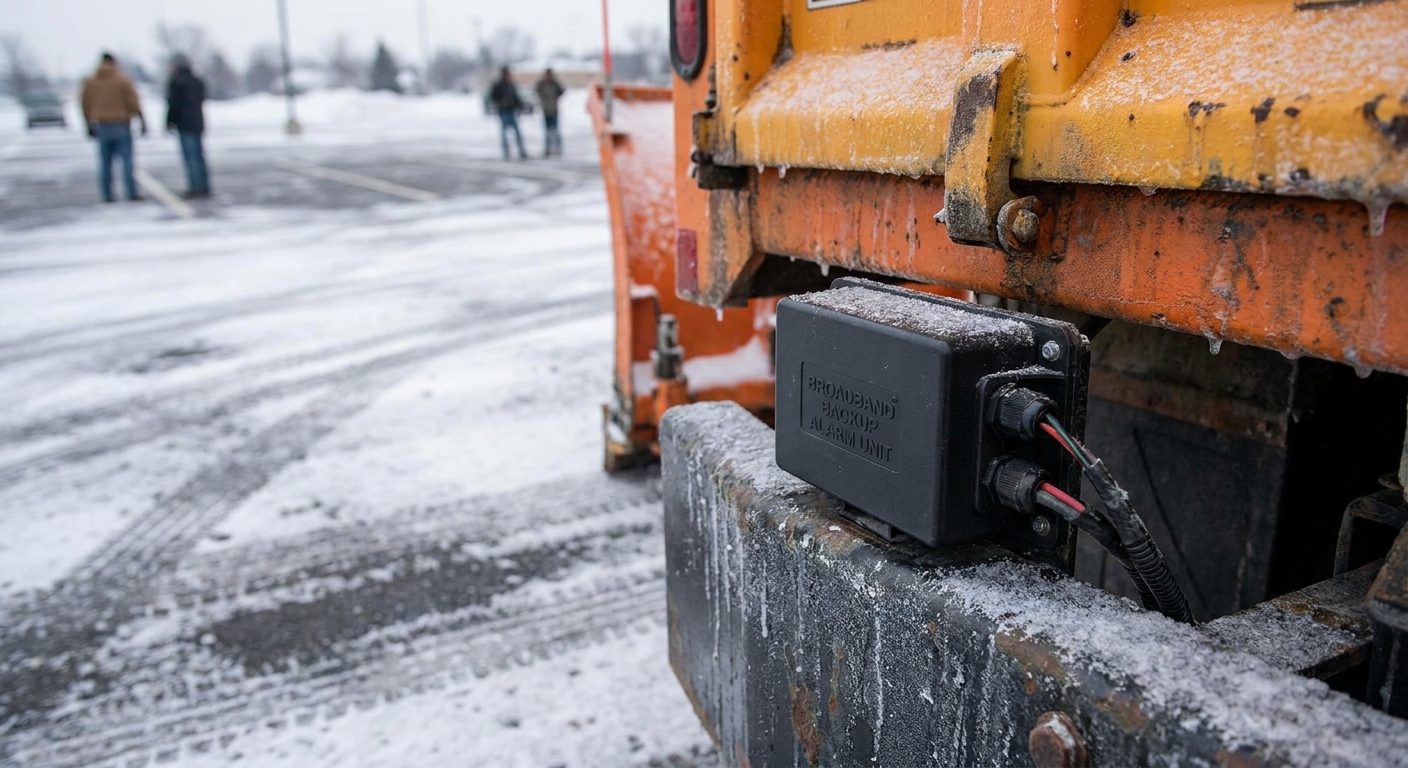
- Broadband back-up alarms: Replacing tonal back-up beeps with broadband alarms reduces the sharp, piercing sound that carries long distances, while maintaining worker safety. Many municipalities now require or encourage these on snow clearing vehicles.
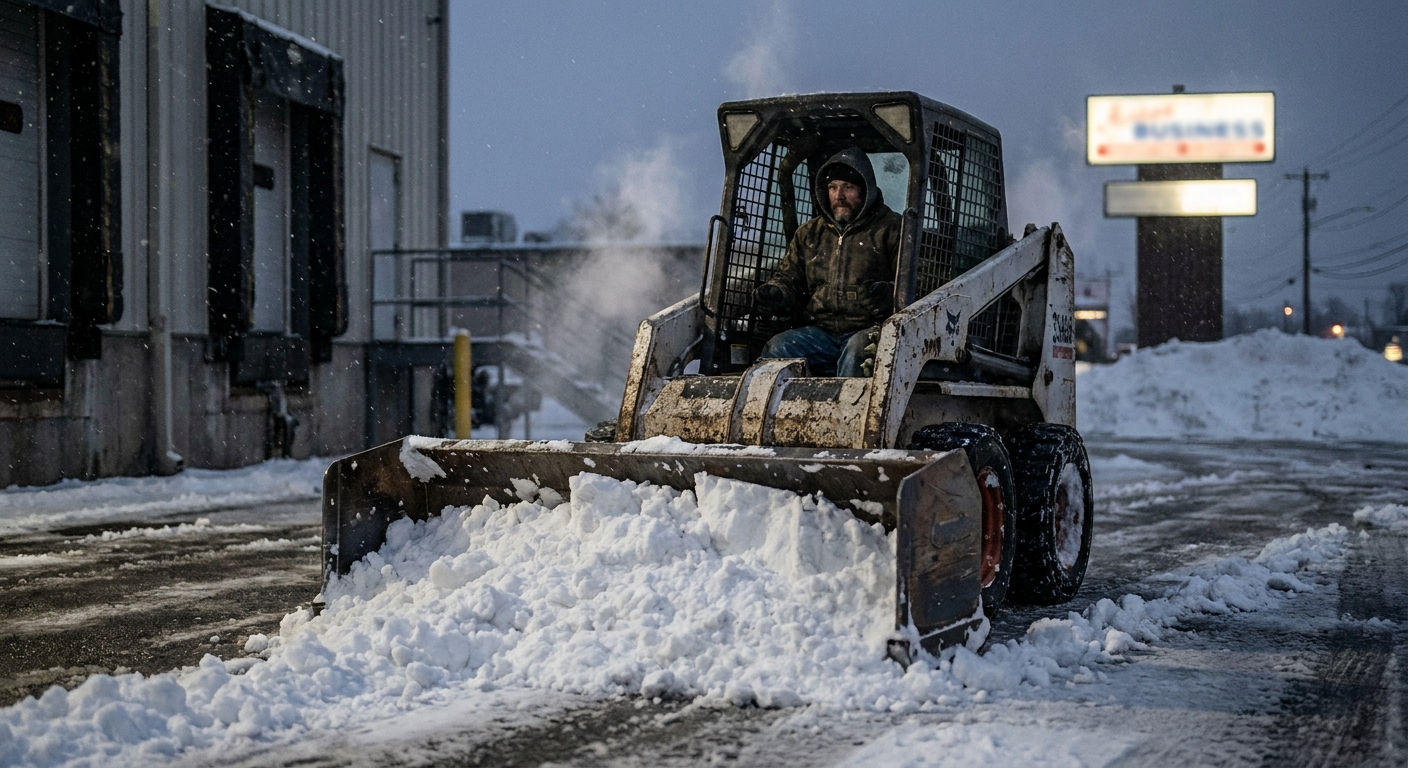
- Electric or hybrid equipment: Electric snow blowers, sidewalk machines, and even electric skid steers produce far less noise than diesel or gas equivalents, especially at idle. They are often rated below typical bylaw decibel limits.
- Regular maintenance: Worn bearings, loose chains, and damaged exhaust systems can add 5 to 10 decibels to a plow’s noise output. A pre-season inspection and routine lubrication keep equipment within expected noise levels.
- Rubber-edged blades: Rubber or polyurethane cutting edges reduce the scraping sound of steel on pavement, especially on concrete or paver surfaces. They may need more frequent replacement but are much quieter.
- Strategic scheduling: Whenever possible, schedule the noisiest operations—loading snow into trucks, using front-end loaders—for daytime hours, and reserve early morning passes for plowing only.
Conclusion and Next Steps
Overnight snow plowing is rarely a simple yes or no under noise bylaws. Permitted hours, weather declarations, and route priorities all interact to determine when and where plows can legally operate. The businesses that navigate these rules successfully are the ones that read the bylaw wording carefully, monitor weather declarations, communicate with their snow contractor, and enforce parking rules on snow nights.
For your next steps, pull up your local noise bylaw and highlight every mention of snow, ice, or winter maintenance. Then call your snow removal provider and ask three questions: What time will you start plowing after a snowfall ends at midnight? Do you track significant weather event declarations? What equipment do you use to minimize overnight noise? If you need a partner who understands these nuances, reach out to discuss your site before the next storm.
Areas We Serve
- Abbotsford snow removal service
- Aldergrove snow removal service
- Burnaby snow removal service
- Coquitlam snow removal service
- Langley snow removal service
- Maple Ridge snow removal service
- Mission snow removal service
- New Westminster snow removal service
- Pitt Meadows snow removal service
- Port Coquitlam snow removal service
- Richmond snow removal service
- Surrey snow removal service
- Vancouver snow removal service